

➜ Structural Expansion
AI Visibility Editorial Series
SEO · GEO · AI Visibility

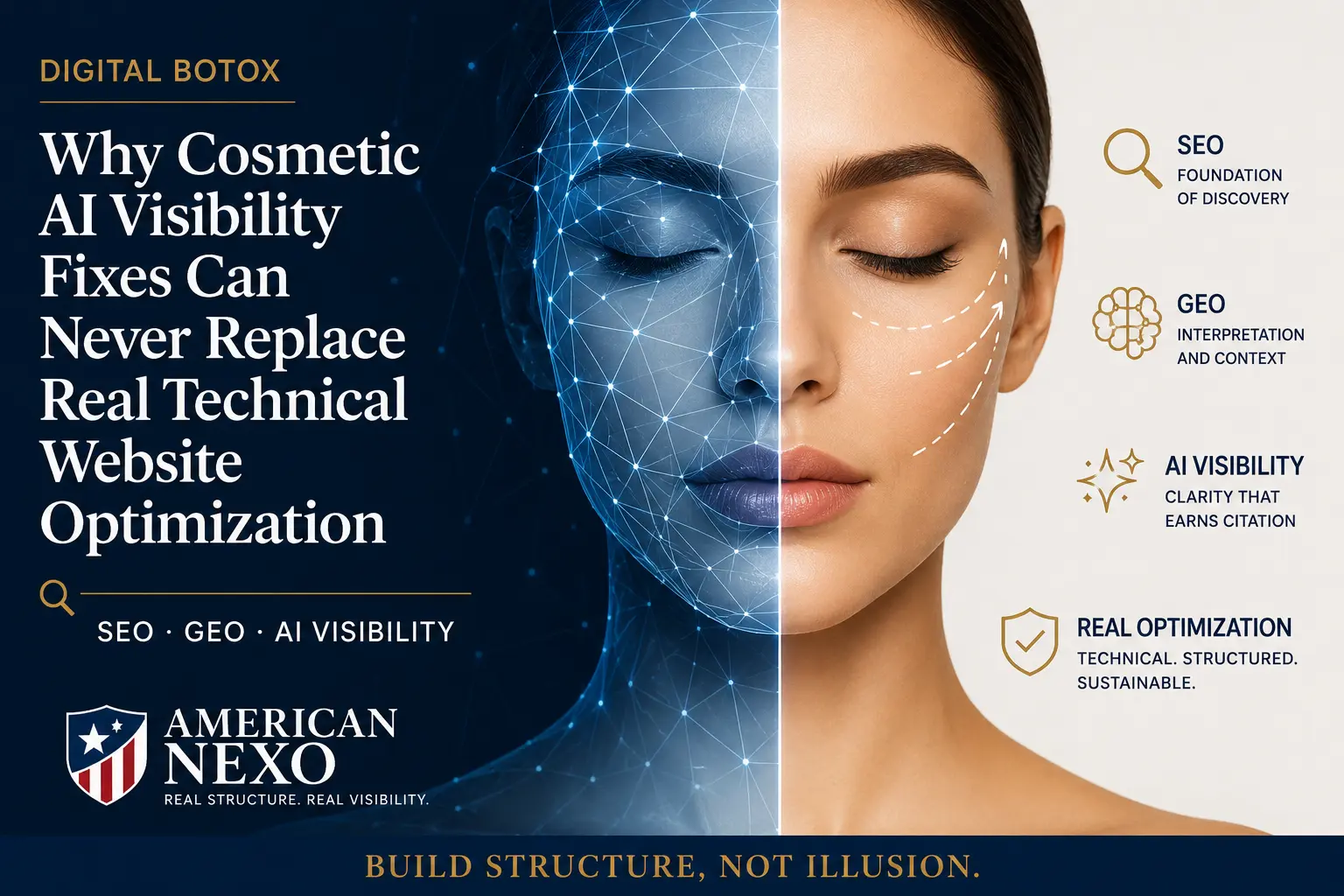
"Digital Botox":
Why Cosmetic AI Visibility Fixes Can Never Replace Real Technical Website Optimization

As AI search evolves, many businesses are being promised instant visibility in generative platforms. But real digital growth is not injected with tricks. It is built through structure, clarity, and technical understanding.

5/23/2026

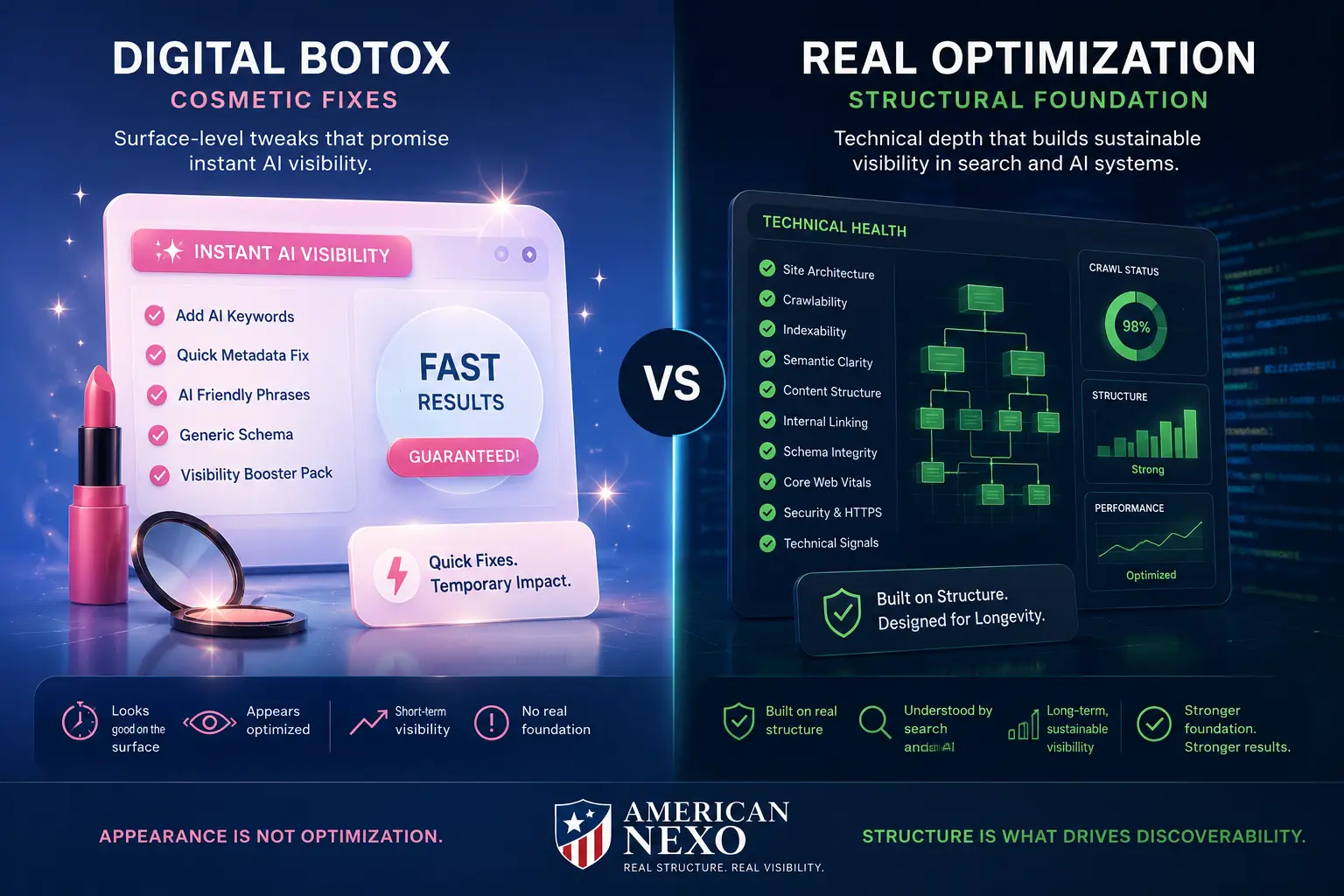
Digital Botox

Cosmetic AI Promises

  • Analyze your site instantly
  • Monthly optimization subscriptions
  • Guaranteed AI visibility
  • Secret GEO ranking methods
  • Quick fixes without technical diagnosis
vs
Real Optimization
  • Title Tag
  • Meta Description
  • Canonical URL
  • Schema Markup
  • Structured Quality Content
  • AI Readiness
SEO and GEO technical structure

SEO, or Search Engine Optimization, remains the technical foundation of digital visibility. It helps search engines crawl, understand, index, and evaluate a website.

GEO, or Generative Engine Optimization, extends that foundation into AI-assisted search environments. It focuses on how clearly a page can be interpreted, summarized, cited, or surfaced by generative systems.

The important point is this: GEO does not replace SEO. It depends on SEO. A website that cannot be crawled, indexed, or understood by traditional search engines will also struggle to build reliable visibility in AI-powered search experiences.
SEO and GEO technical structure

The rise of AI-assisted search has created a new wave of digital marketing promises. Many businesses are now being told that visibility can be achieved through quick adjustments, isolated AI-focused tweaks, or subscription-based cosmetic optimization packages.

These promises often focus on surface-level signals: adding a few keywords, inserting generic AI-oriented phrases, repackaging metadata without context, or applying repetitive visibility formulas that claim immediate ranking improvements.

This is what we describe as "Digital Botox" — cosmetic interventions designed to create the appearance of optimization without addressing the underlying technical health of a website.

Real technical optimization is different. It examines structure, crawlability, semantic clarity, metadata consistency, schema integrity, content organization, and the signals that help both search engines and AI systems interpret a website correctly.

Visibility built on cosmetic fixes may create temporary impressions, but sustainable discoverability requires structural accuracy, technical diagnosis, and long-term optimization discipline.

SEO and GEO technical structure

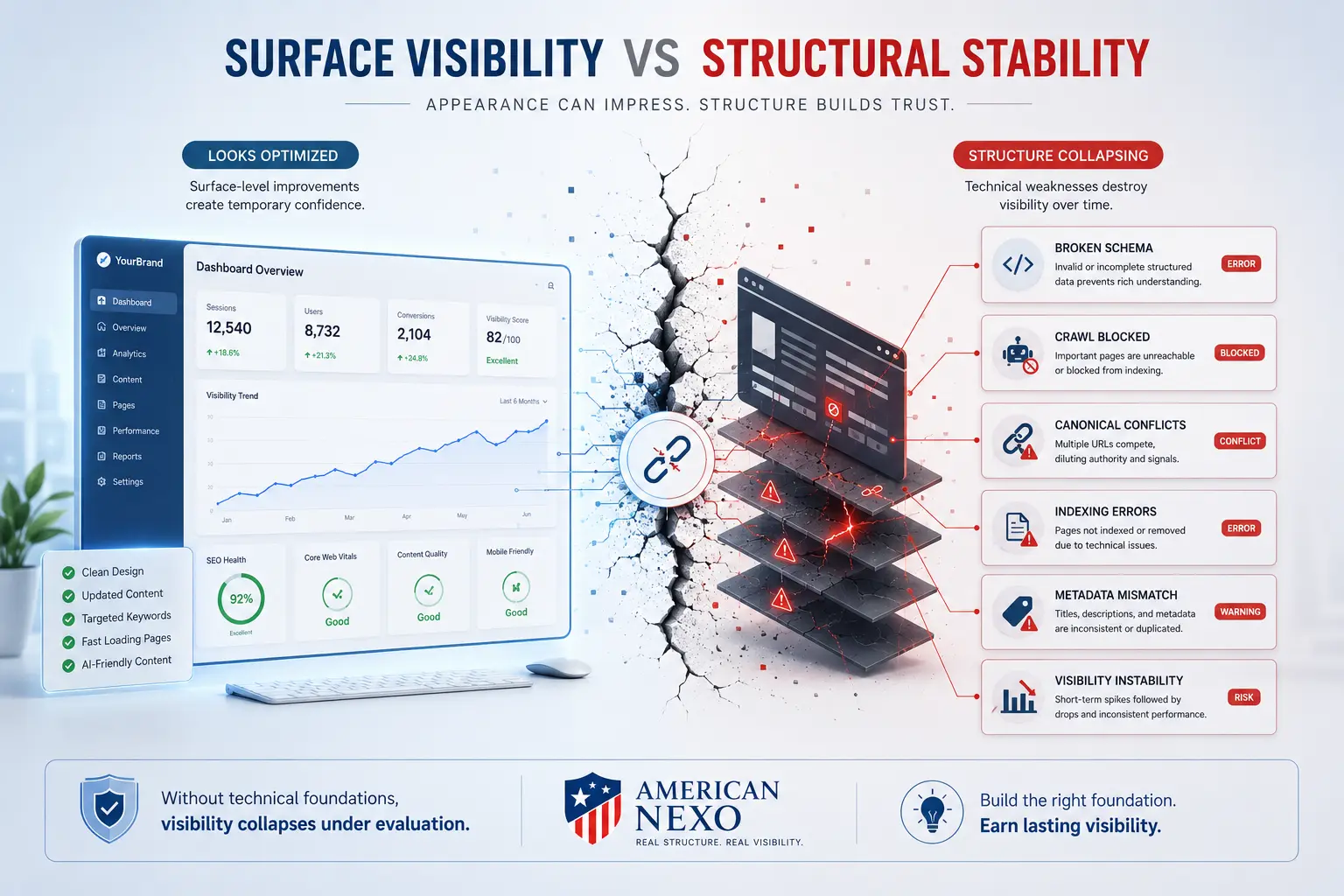
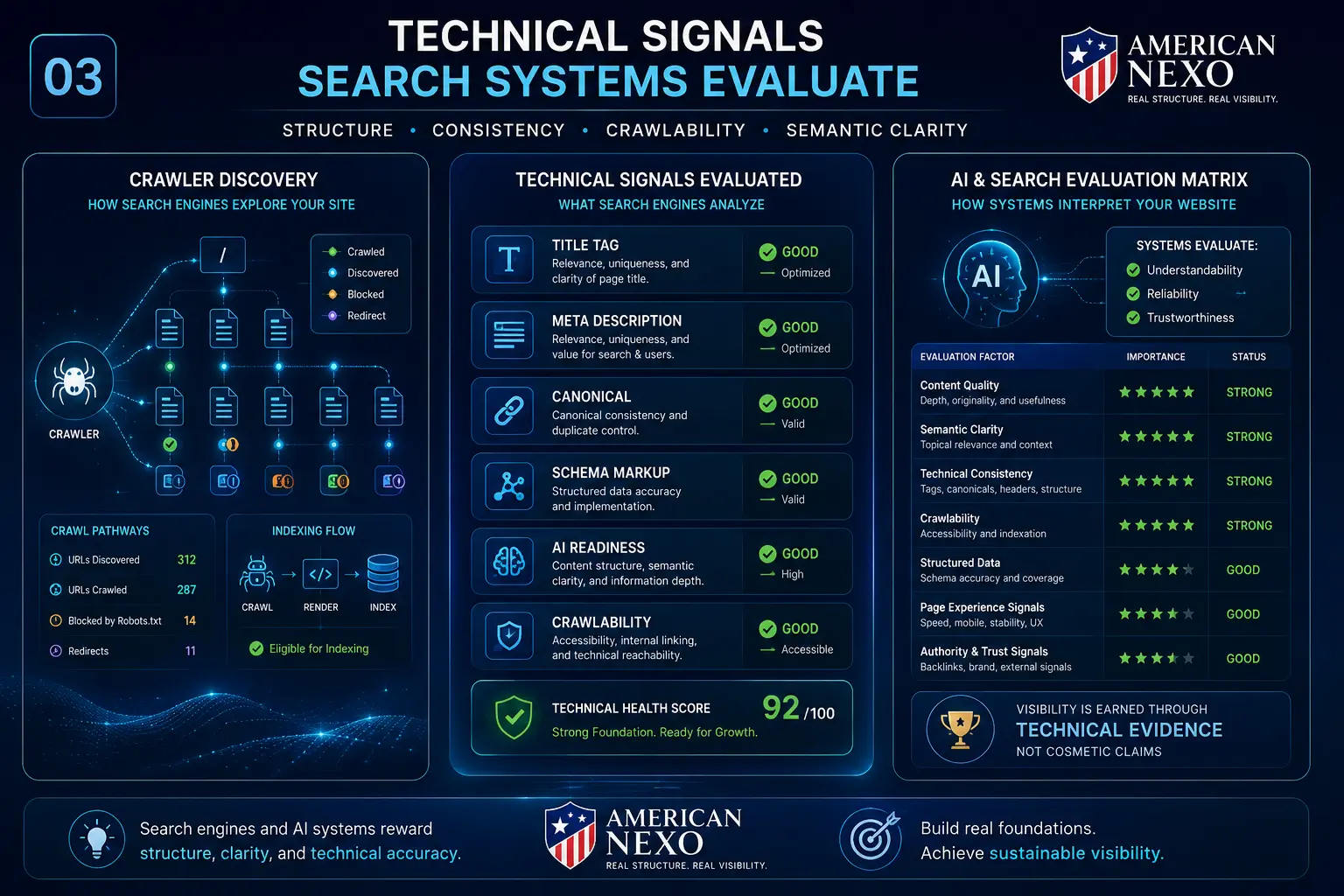
Modern search engines do not evaluate websites based on isolated cosmetic adjustments or superficial optimization claims. Their systems analyze a much deeper technical structure.

When a website is crawled, search systems examine whether its architecture is accessible, understandable, and technically coherent. This includes title integrity, metadata consistency, canonical accuracy, semantic structure, and machine-readable signals that help systems interpret context.

AI-assisted search environments extend this evaluation even further. Beyond discoverability, they assess whether content is logically organized, semantically clear, and structurally reliable enough to be interpreted, summarized, and surfaced with confidence.

This is why real visibility depends on measurable technical signals such as structured metadata, crawlability, schema consistency, page hierarchy, and content quality.

Visibility is not granted because a website claims optimization. It is earned through technical evidence that systems can evaluate objectively.

SEO and GEO technical structure

Many websites show signs of apparent optimization: updated keywords, polished landing pages, rewritten headlines, and cosmetic AI-oriented adjustments.

At first glance, these changes may create the impression of technical sophistication. However, if the structural foundation underneath remains weak, visibility becomes fragile.

Without clear metadata architecture, crawlable pathways, semantic consistency, canonical stability, and machine-readable context, search systems struggle to build reliable confidence in the site.

This often produces unstable performance patterns: temporary visibility spikes followed by indexing inconsistencies, weak citation reliability, reduced discoverability, and poor long-term ranking sustainability.

Real optimization is not measured by immediate visual improvements. It is measured by structural resilience — the ability of a website to remain understandable, indexable, and trustworthy over time.

SEO and GEO technical structure

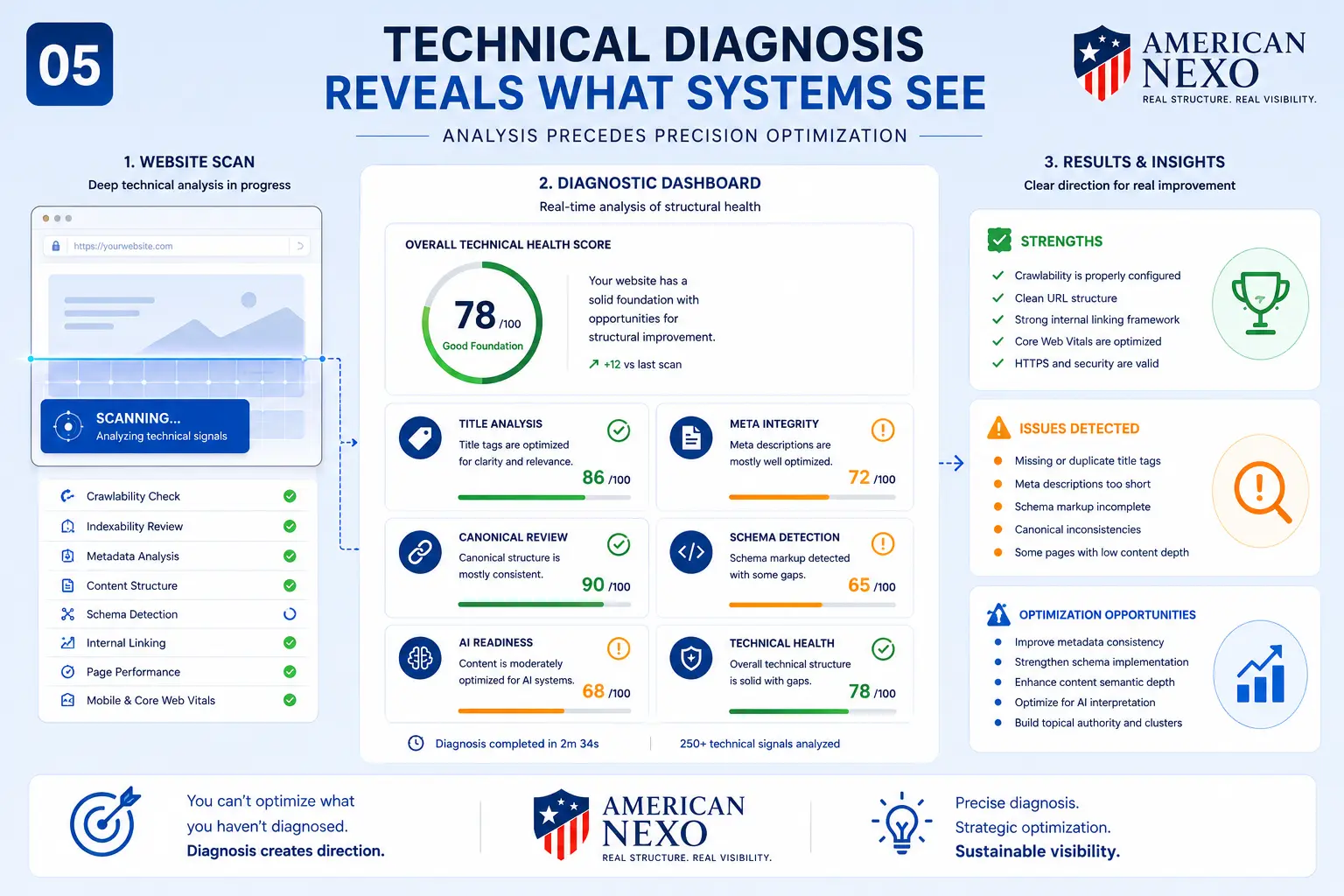
Professional optimization never begins with assumptions. It begins with diagnosis.

Before any technical improvements can be applied, a website must first be evaluated to understand its current structural condition.

This diagnostic phase identifies the invisible technical signals that define discoverability, crawlability, semantic clarity, metadata integrity, and AI interpretation readiness.

Without this analysis, optimization becomes guesswork. Businesses often implement changes blindly, adjusting visible elements while overlooking the deeper technical architecture that search systems actually evaluate.

A structured technical diagnosis reveals what is functioning correctly, what is underperforming, and what structural weaknesses are limiting sustainable visibility.

Real optimization is not the act of changing random elements. It is the process of applying precise improvements informed by measurable technical evidence.

SEO and GEO technical structure

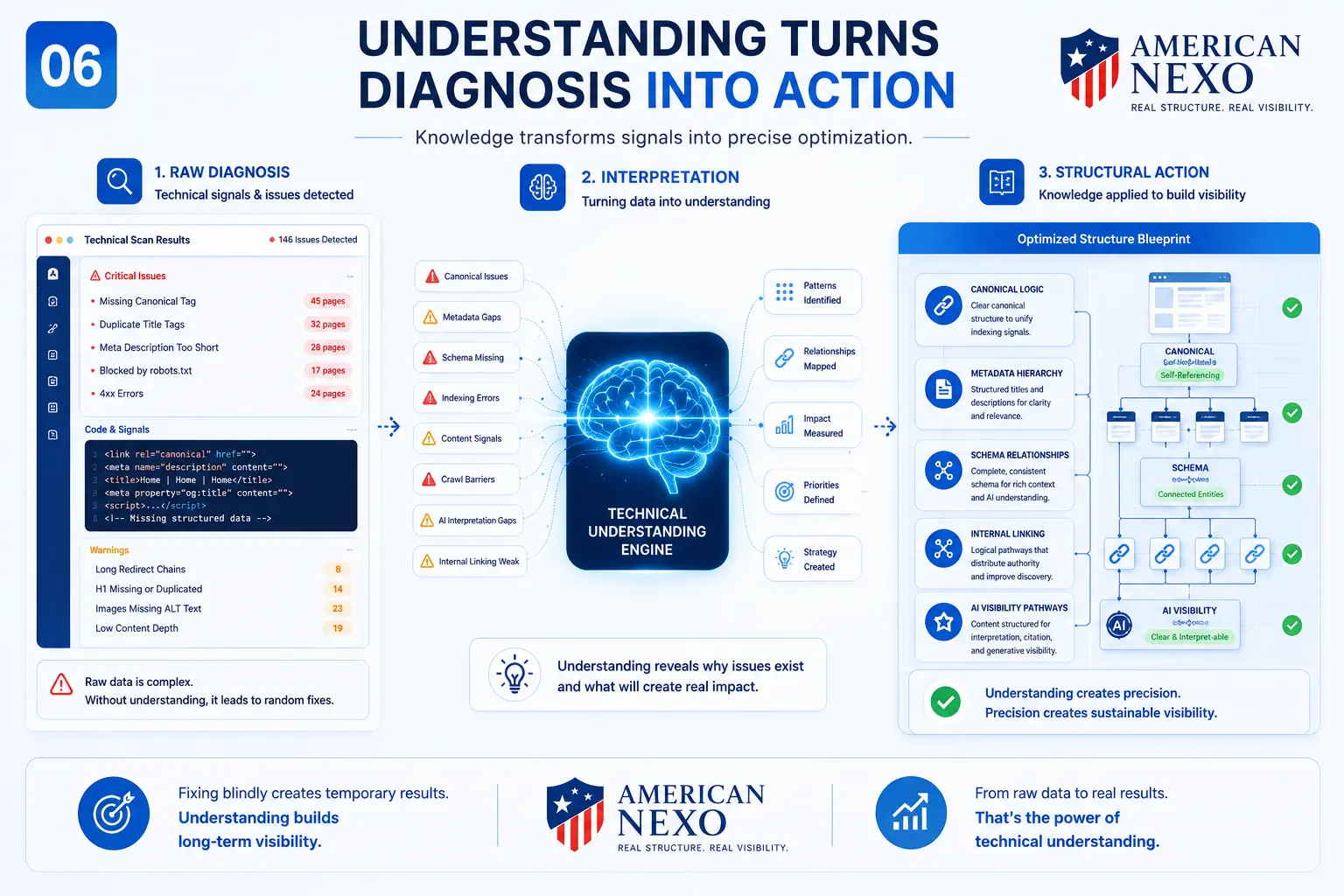
A technical diagnosis reveals what is happening inside a website, but diagnosis alone does not create improvement.

To optimize effectively, businesses must understand the technical meaning behind the signals being evaluated.

A missing canonical reference is not simply an isolated error. It affects indexing consistency. Weak metadata structure is not just incomplete formatting. It reduces interpretive clarity for both search engines and AI systems.

Every technical signal exists within a larger structural relationship. Search systems evaluate websites as interconnected architectures, not as disconnected adjustments.

This is why optimization requires technical understanding.

Without that understanding, businesses often apply fragmented changes that appear active but fail to strengthen structural integrity.

Real progress happens when technical findings are translated into clear knowledge that enables precise action.

Understanding structure transforms optimization from random correction into intentional engineering.

SEO and GEO technical structure

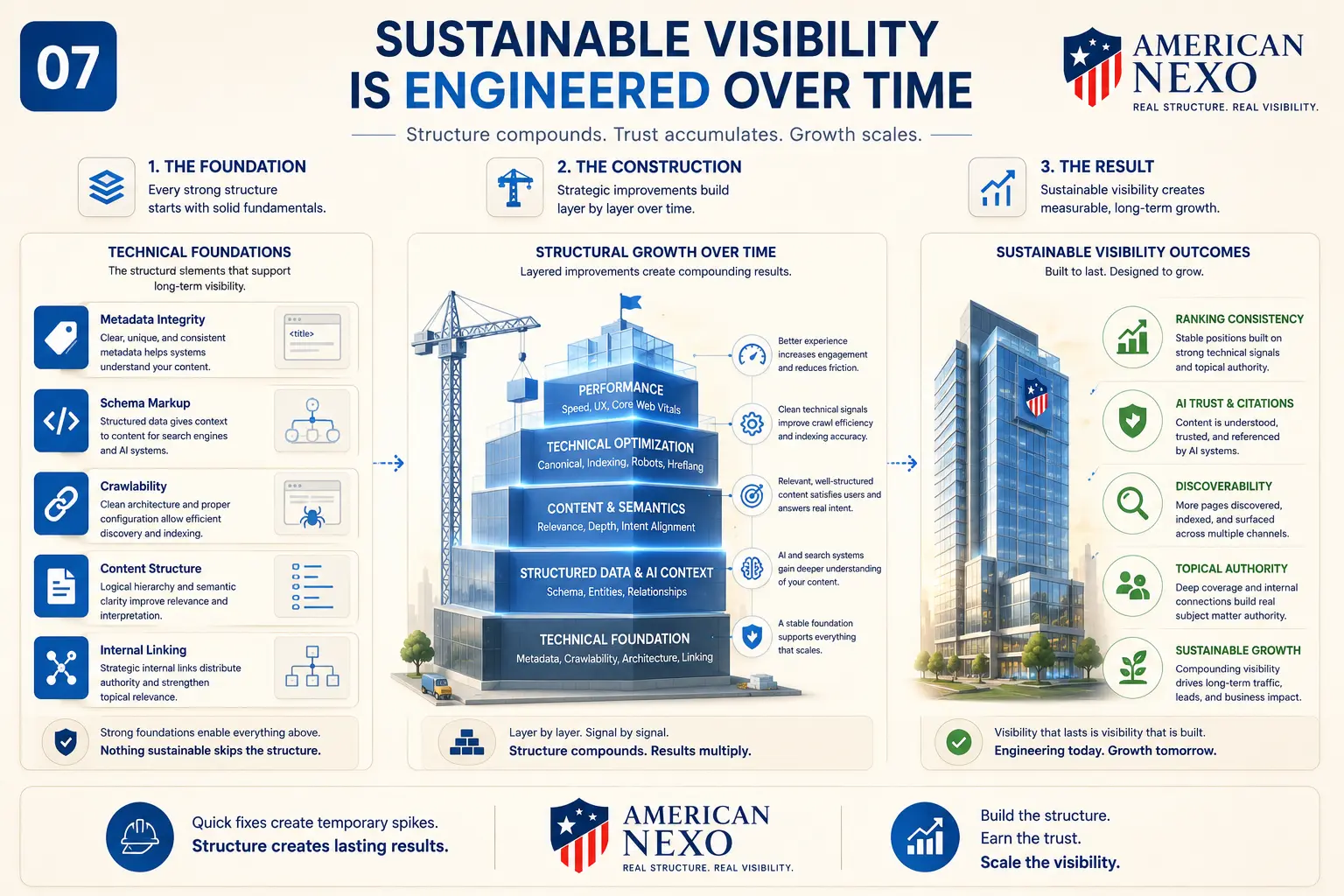
Sustainable visibility does not appear suddenly through isolated interventions.

It is built progressively through technical consistency, structural reinforcement, and deliberate optimization decisions applied over time.

Search engines and AI-assisted systems evaluate trust through repeated structural evidence. They recognize coherent architecture, stable metadata, semantic clarity, crawlable pathways, and sustained technical reliability.

This process resembles construction more than cosmetic enhancement.

Each technical improvement reinforces the foundation: better metadata strengthens interpretation, stronger schema improves contextual understanding, cleaner architecture improves crawl efficiency, and structured content improves discoverability.

These signals accumulate.

That accumulation is what produces durable visibility.

Temporary interventions may create short-lived fluctuations, but only structural consistency creates authority that persists through algorithmic evolution.

Real digital growth is not injected. It is engineered.

SEO and GEO technical structure

The future of digital visibility will not belong to cosmetic interventions or short-term optimization shortcuts.

It will belong to websites built with technical clarity, structural integrity, and informed optimization decisions.

As search systems evolve and AI-assisted interpretation becomes more sophisticated, websites must become more understandable, more coherent, and more structurally reliable.

This requires clarity.

Clarity reveals what systems evaluate. Clarity exposes structural weaknesses. Clarity transforms technical diagnosis into purposeful action.

Real optimization begins when businesses stop asking how to appear optimized and start asking how to become technically understandable.

That is where sustainable visibility begins.

Analysis provides the diagnosis. Understanding provides the direction. Optimization provides the structural evolution.

Real digital growth is not manufactured through appearances.

It is built through clarity.

Analyze your website and get your report, improve your SEO and AI visibility, by learning how to optimize your digital presence step by step with the High-Performance Website Brain Manual.

build structure, not illusion